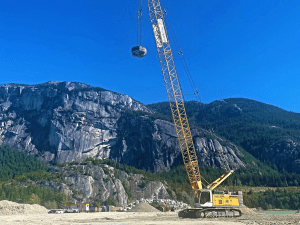
Soil Mixing

An Environmentally Sound Approach to Ground Improvement

Deep Soil Mixing (DSM) or Soil Mixing (SM) is a very flexible ground improvement technique used for a wide variety of applications that reinforces extremely soft, very high moisture soils by mechanically mixing them together with a specially designed auger completely in-situ with a cement-like binding agent.

How it Works

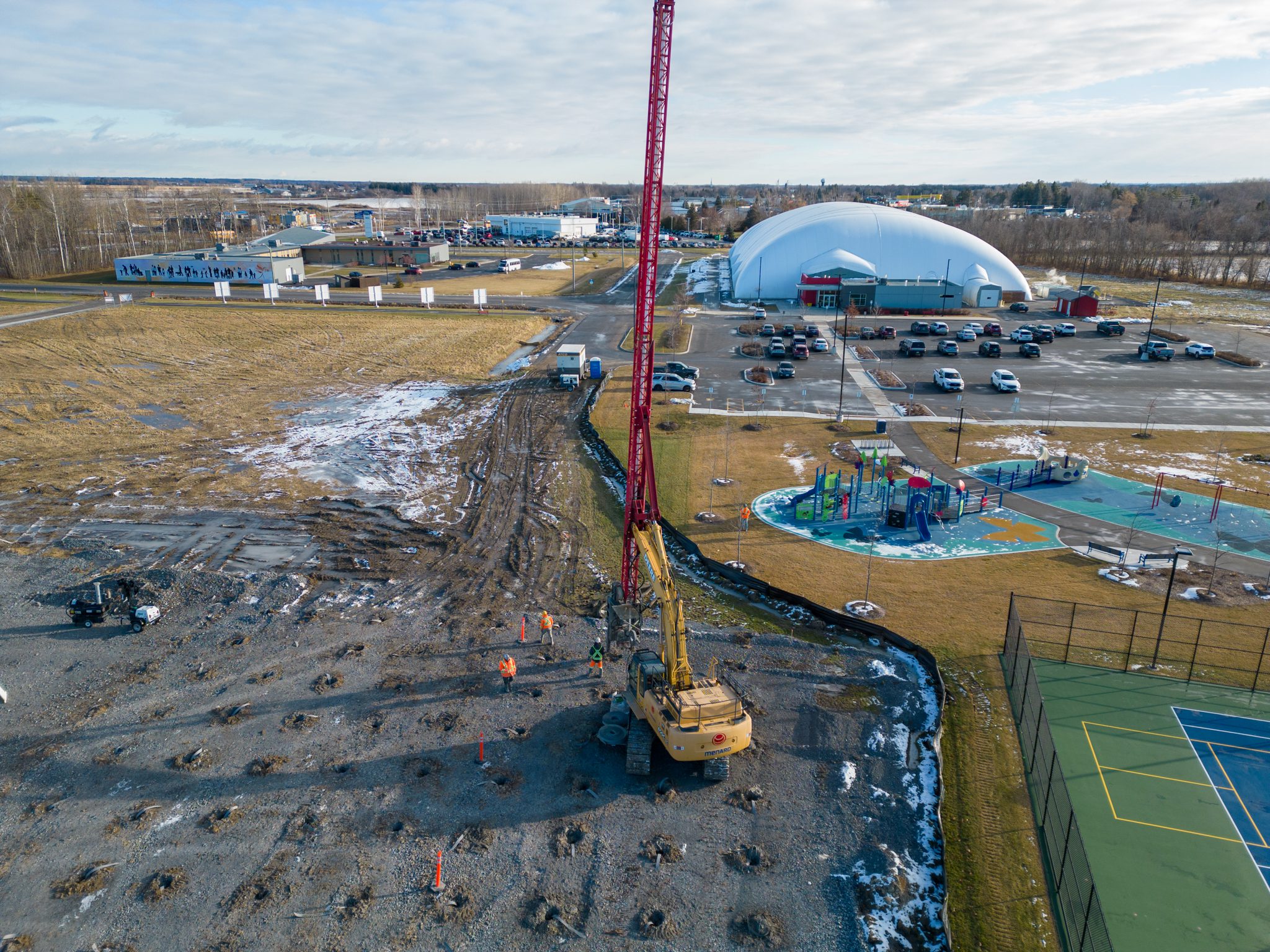
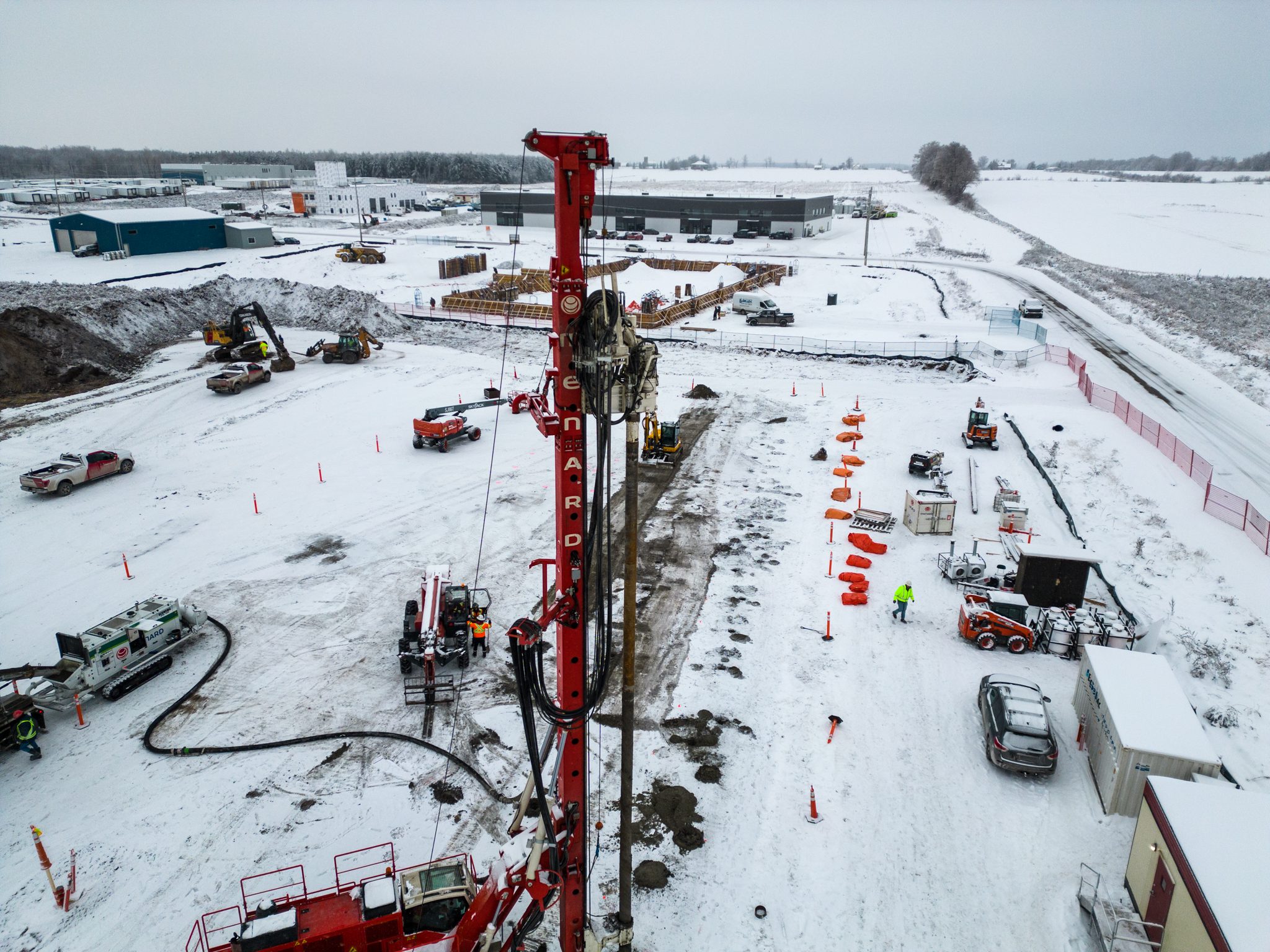
DSM is the process of mixing cement or other binders with in-situ soils by means of augers or another type of specially designed tooling. This mixing process breaks up and “opens up” the existing soils in place to mix in with the binding agent. Gradually and under low pressures, both become naturally bound together to ultimately form either a high-strength column or block of incredibly strong reinforced soil. Several other configurations, such as stand-alone components, grids, wall cells and blocks. This is a preferred method for particularly environmentally sensitive projects since soils stay largely in place during this entire process, making this approach not only environmentally positive but also an excellent economic approach to dramatically improving the site’s soils.

Advantages

Vibration-free and non-disruptive
Environmentally unobtrusive
Suitable for seismic areas
Increases bearing capacity and shear resistance

Technical details

  • Soft soils 
  • Non-cohesive soils 
  • High-Moisture soils 
  • Treat soils up to 30m deep 
  • Bearing pressure of up to 400 kPa SLS 
  • Single or Multiple Augers Utilized 

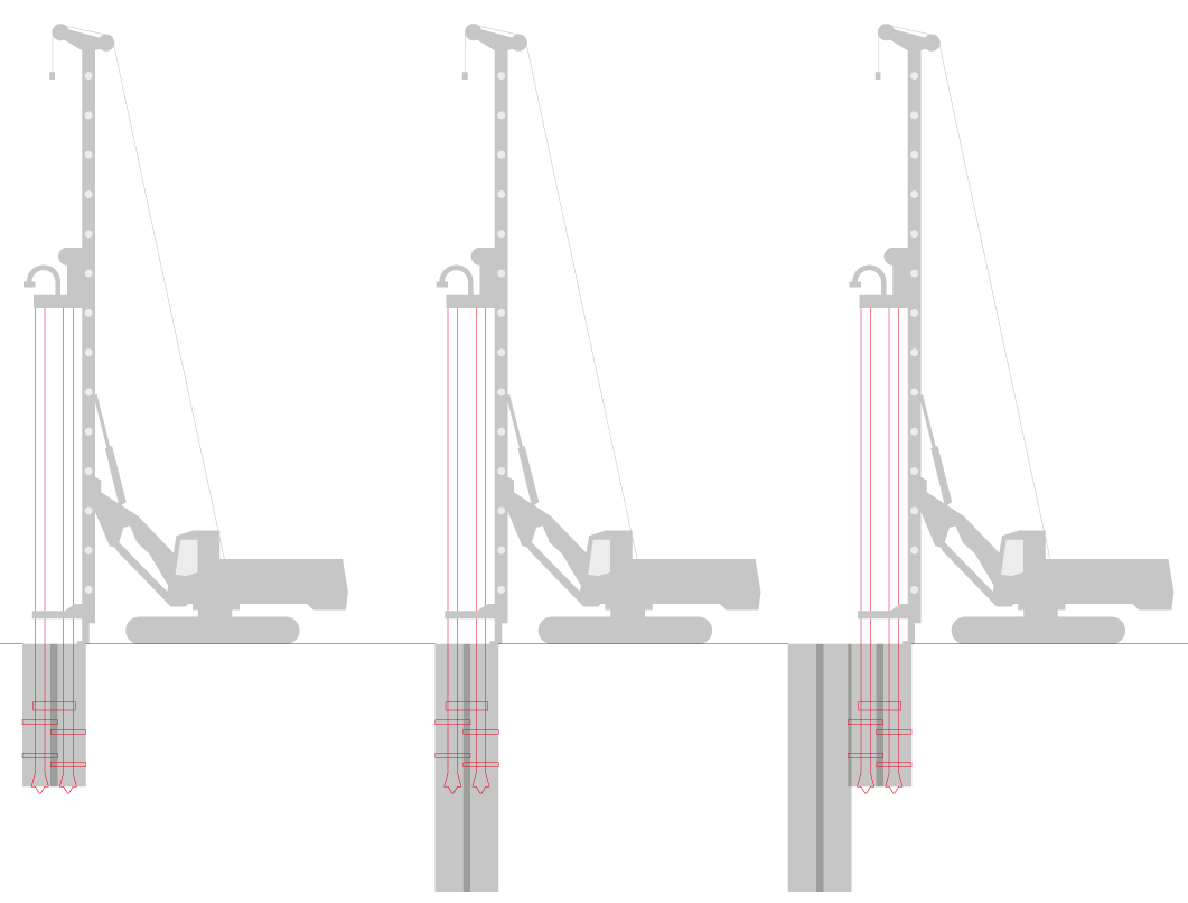
Soil mixing may be performed using augers or paddles to form soil mix columns. Depending on the application, columns can be installed individually or to form continuous rows, panels, grids, or block/mass treatment. Augers/Paddles are lowered into the soil, which effectively pulls apart the soil's fundamental structure. Then, the selected binder agent is gradually introduced under low pressure through an injection rod located at the very end of the drilling rod and vigorously mixed together with the soil by the mixing blades. After reaching the designed depth, the auger is lifted and lowered to ensure thorough mixing of the soil with the binder and to form a homogeneous column or another type of strengthened soil structure. The binder amount and mixing parameters are adjusted accordingly as the exact soil strength and specifications are achieved or exceeded. 

Our Promise of
Quality Assurance

All of our ground improvement proposals always have straightforward pricing, so you will never have to worry about any unexpected project extras. The cost that we quote you is your project’s cost; it’s that simple. Furthermore, we will always work to meet and exceed all your project expectations by performing tasks using the most thorough quality control measures possible to ensure a positive project outcome for your project; this is our promise to you.

We invite you to review our testimonials below and see what makes Menard Canada different.

Trusted on job sites across Canada

From Vancouver to Quebec City, here is what project managers, superintendents and engineers say after working with our crews.
FRAM + SLOKKER

“Menard was very professional and got their work done quickly and without issues, well ahead of schedule.”

Chris Munnings

High Rise Project Manager

AECON

“Starting two weeks early and finishing two weeks early put us one month ahead of schedule.”

Zain Jessani, P.Eng.

Project Engineer

SKYGRID CONSTRUCTION

“The CMC method avoided deep shoring and dewatering while limiting excess soil on our site.”

Nicholas Schady

Superintendent

PEMBINA PIPELINE

“An excellent job installing the stone columns in extremely challenging ground conditions.”

Richard Gagné, P.Eng.

Project Manager

Contact us

Whether you are preparing a new project or need technical advice, our team is at your disposal. Contact us to learn more about our expertise and solutions.